
They did great on our Deck and fence. They drew up the plans for our deck and made our back yard space a dream come true. Great to work with and exceptional quality of work.
Fence Repair,the Honest Kind
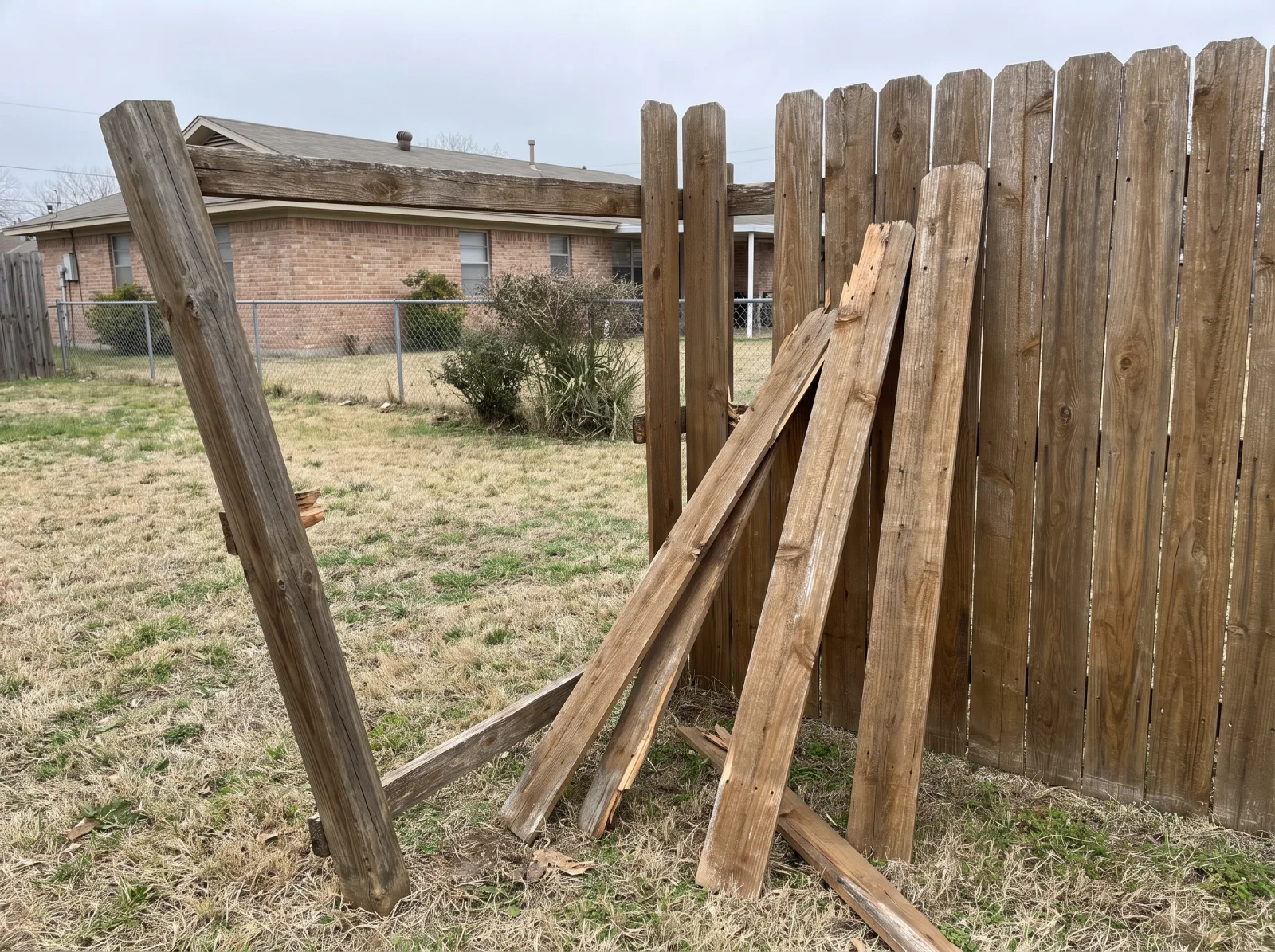
A leaning post, a gate that won't latch, a section a storm took down. Somebody looks at yours before anyone says repair or replacement.
Repair or Replace
We know sometimesit's not the whole fence
Not every damaged fence needs to come out. You don't have to work out whether yours needs a repair or a replacement before you call. We look at what's actually wrong first, then tell you which one you're looking at once the posts and pickets have been checked, not guessed at over the phone.
What Gets Fixed
Here are some thingswe get called out for
Whichever of these it is on your property, wood fence repair or chain link, it starts the same way: someone looks at what's actually wrong before it gets called a repair or a replacement.
What people call about most:
- How do you fix a leaning fence post? Much of this area sits on heavy clay that swells when it's wet and shrinks when it's dry, and that movement works on a post year after year until it leans. Fixing it right means resetting the post for the soil that's actually on your property, not propping it back up straight and hoping.
- Will a repaired fence hold up in the next storm? Coastal weather reaches this far inland, and wind is usually what takes a fence down, whether it's a full section or a few panels. It lands on the posts, not the pickets. Your repair gets the same attention to post depth and bracing a new install gets, so it's not just patched back the same way it failed the first time.
- Do you fix gates that sag or drag? A gate that's dropped and drags along the ground is one of the most common repair calls we get. Usually it's the hinge, the post, or both, and fixing it means getting your gate hanging level again, not forcing it to latch.
- Can you replace just a section, not the whole fence? If your posts are still sound and only a panel or section is damaged, that's a replacement job, not a full rebuild. Matching the new section to what's already there is part of the work.
What You Can Expect
An honest look,then an honest answer
Every repair call starts with someone actually looking at your fence, not quoting off a description over the phone. What's wrong gets named plainly, a repair, a partial replacement, or a full one, and why. Requirements around permits and HOA approval work the same on a repair as they do on a new install: it depends on your city, your county, and whether you're in a subdivision with an HOA, and we tell you what's known about your location rather than guessing.
The Work
A closer lookat the kind of thing that gets fixed
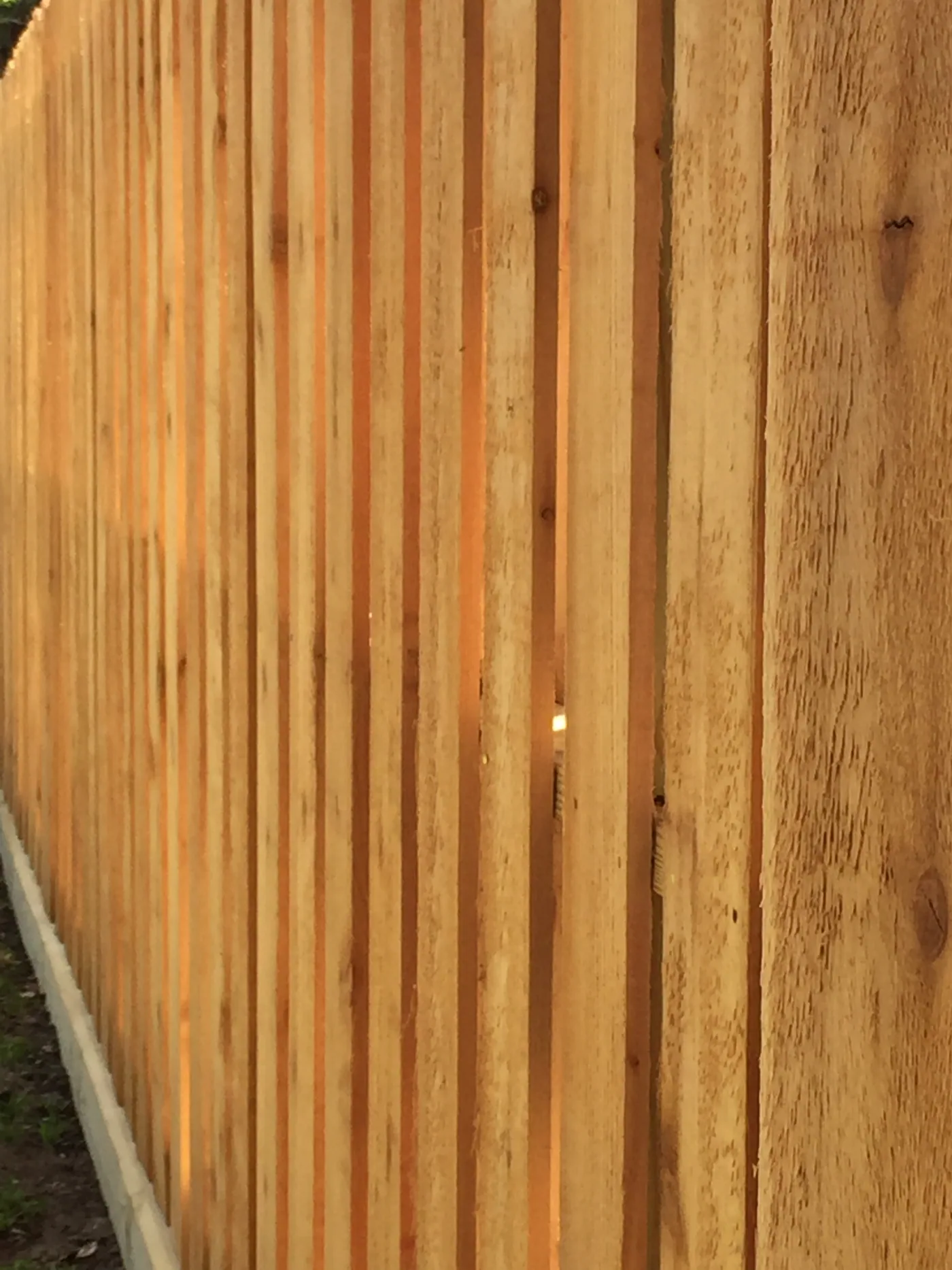
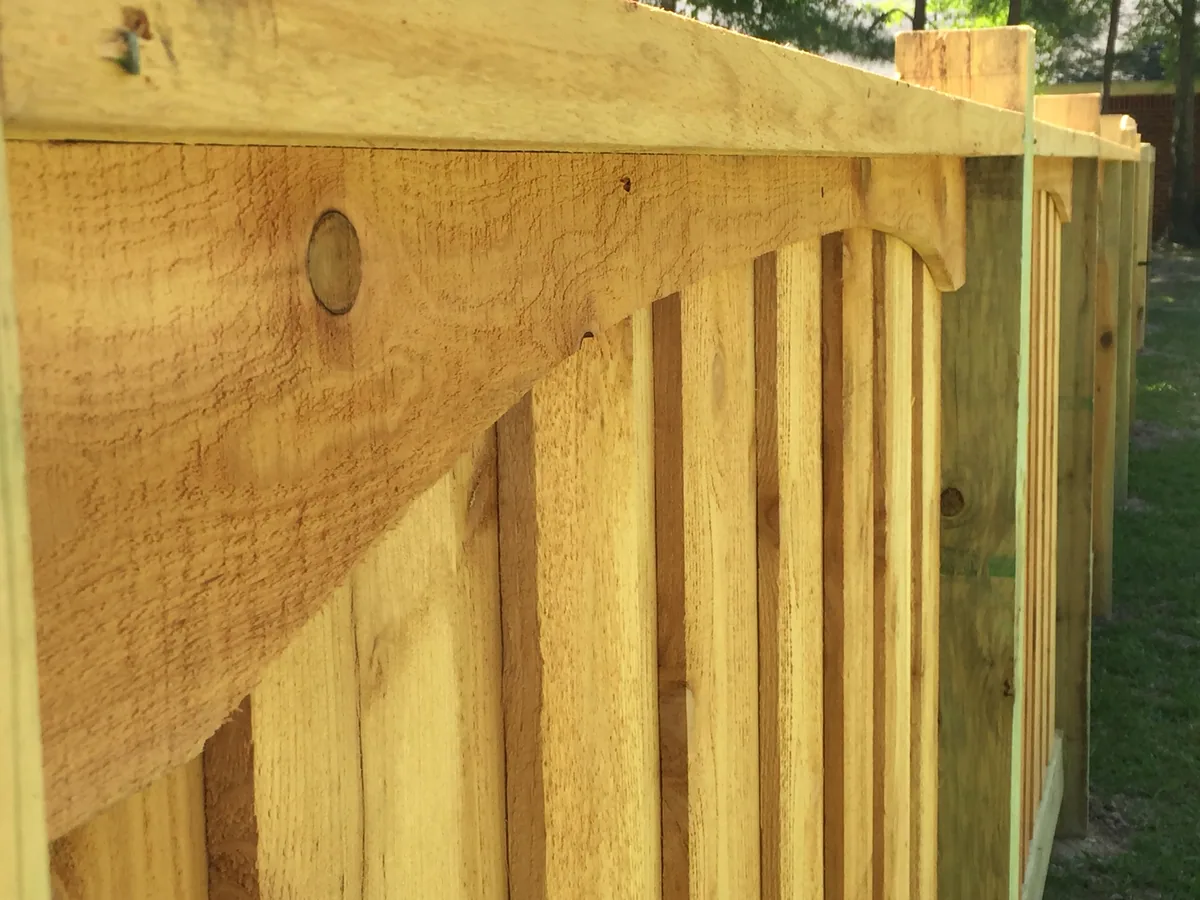
Real fence, real close, the scale of section a repair actually touches.
Homeowners tell it straight
Don't take our word for it.Take theirs.
10+ years
of showing up for
Dayton-area homes
Dayton-area homes
What Gets Repaired
Not every damaged fenceneeds to come out
Six things people call us about most. Open one for the real answer, not just the headline.
Fence Post Repair for Leaning or Heaved Posts
Much of this area sits on heavy clay that swells when it's wet and shrinks when it's dry, and that movement works on a post year after year until it leans. Wood posts get it from both directions, since decay concentrates in a narrow band right at the soil line rather than down at the tip. Fixing it right means resetting the post for the soil that's actually on your property, not propping it back up straight and hoping it holds.
Emergency Fence Repair for Storm-Damaged Sections
A blown-down section gets the same attention to post depth and bracing a new install gets, so it's not just patched back the same way it failed the first time. Wind lands on the posts rather than the pickets, which is why a fence usually goes over with its panels still in one piece. Whether it's a full run or a few panels, the fix starts with why it came down, not just standing it back up.
Fence Gate Repair for Sagging or Dragging Gates
A gate that's dropped and drags along the ground is one of the most common repair calls we get. The fix is getting your gate hanging level again, not forcing the latch to catch. Sometimes it's the hinge, sometimes the post underneath it has moved, and what we do is different depending on which one it is.
Damaged or Missing Pickets, Cap and Trim
A top cap covers the end grain of the pickets, which is where water gets in first, so missing or damaged cap and trim doesn't stay a small problem for long. Replacing pickets and cap and trim is straightforward work, matched to what's already on the fence rather than a mismatched patch.
Fence Panel Replacement, Partial Sections
If your posts are still sound and only a panel or section is damaged, that's a replacement job, not a full rebuild. Matching the new section to what's already there, material, height, and style, is part of the work, so the repair doesn't stand out from the rest of your line.
Chain Link Fence Repair, Fabric and Top Rail
The woven wire mesh is only as good as the posts and the top rail underneath it. A sagging or torn section usually traces back to the frame, not the fabric itself, so your repair starts there rather than with re-stretching the mesh.
Questions
What people askbefore a repair
Have one that is not on this list? The fastest answer is a phone call.
Call NowIt usually comes down to your posts. They carry the whole load into the ground, so a fence with sound posts and damaged pickets, rails, or a dropped gate is a repair. Posts that have rotted, snapped, or leaned across a run are a different answer. If you send us a photo of where a post meets the dirt, that answers most of it before anyone drives out. We repair when a repair is honest, and say so when it isn't.
The clay soil across this area swells and shrinks with the weather, and that's usually what worked your post loose in the first place. Fixing it means resetting the post for the ground it's actually in, not straightening it and hoping.
Your repair gets the same post depth and bracing attention a new install gets. Coastal wind reaches this far inland, and it lands on the posts rather than the pickets, so a fence patched back the way it failed the first time won't hold the next time either.
Yes, and it's one of the most common calls we get. It's usually the hinge or the post, sometimes both, and the fix is getting your gate hanging level again rather than forcing the latch to catch.
That depends on your city, your county, and whether you're in a subdivision with an HOA. Requirements are not the same across this area. We will tell you what is known about your location and where you need to confirm it yourself.
On a repair or a partial replacement, we match what is already on your fence, the same material, height, and style, since that is usually what a covenant specifies. What counts as an HOA approved fence is set by your own documents rather than by us, and some neighborhoods want the work approved before it starts. We will tell you what is known about your area and where you need to confirm it yourself.
Request a Quote
Tell us what's wrong.Get a real number in writing.
It starts with a few details, a photo or two of what you are looking at, and a call. Nothing gets quoted from a description alone.
- Your photos get looked at first
- Your quote comes in writing before work starts
- You can pay over time through Affirm, subject to approval
Serving Dayton and Southeast Texas.